티타임 Tea Time w/ Elaine H. Kim

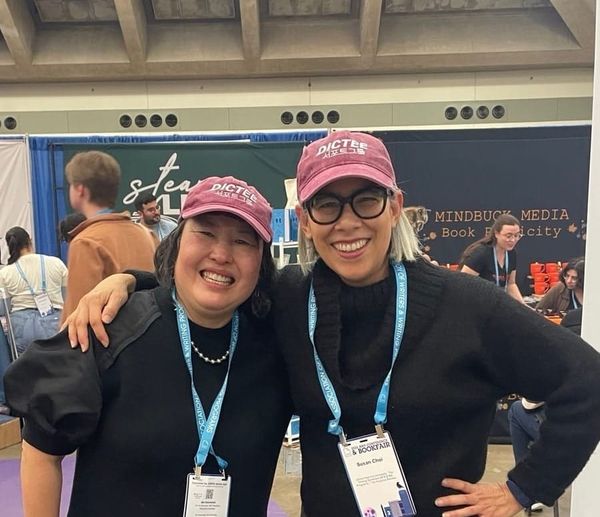
By S. Isabel Choi and Hannah Michell
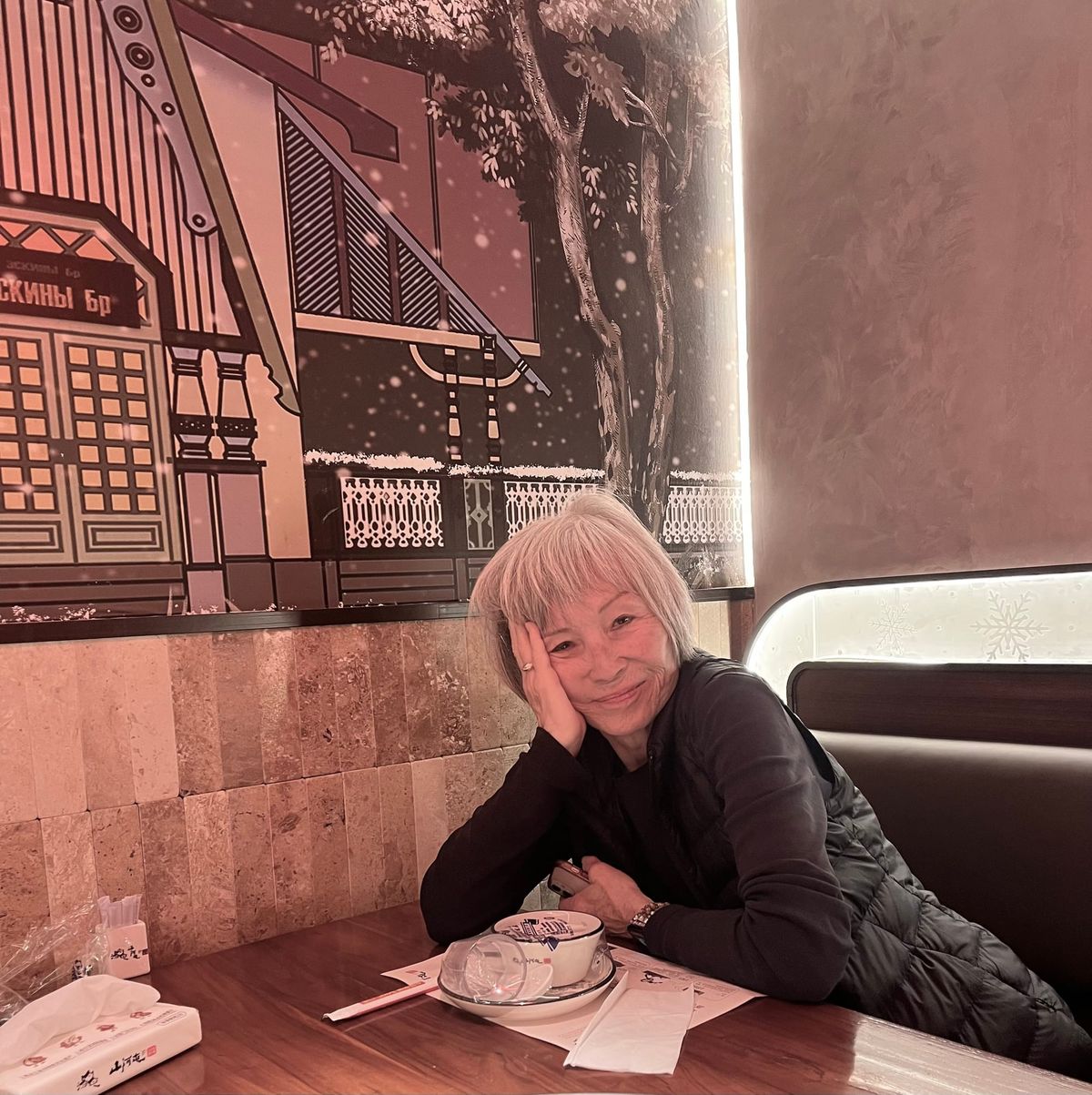
Elaine H. Kim, professor emerita at the University of California, Berkeley, is a trailblazer and one of the founding scholars of Asian American and Ethnic Studies in the United States. Her much-anticipated memoir, Primary Sources, will be released in September 2026. As publisher Kaya Press notes, the book is “a powerful example of the kind of crucial, foundational history that is passing us by and an effort to preserve Asian American history by publishing stories before they are lost.”
Primary Sources opens: “I was about four years old when I first became aware that I was strange and repulsive.” Raised in one of the few Korean families in Maryland, Elaine carries the reader through her pain of isolation and assimilation, search for community and cultural identity in the wake of visits to Korea, and her journey earning academic stripes as a single mother.
In 1969, she joined the Asian American Political Alliance (AAPA), part of the Third World Liberation Front (TWLF), the precursor to Cal’s Asian American Studies Program. Elaine shares behind-the-scenes anecdotes of how she rebelled and forged new pathways, classes, and community programs, including Asian Women United (AWU), the Korean Community Center of the East Bay (KCCEB, now MARU), and the Asian Immigrant Women Advocates (AIWA). These organizations that she has helped seed, still thrive today.
Elaine accomplished all these feats, and more, while navigating hostile academic environments and societal restrictions on women, as well as fending off physical intimidation from the South Korean government after speaking out against the country’s dictatorships. The memoir also uncovers the unusual life of her mother, who grew up in the US with a Displaced Person’s passport and lived as a flapper in Chicago before meeting Elaine’s father.
Simply put, Primary Sources is a page turner worthy of a K-drama.
Elaine is the original radical ahjumma—the perfect person to interview for our inaugural newsletter, launched in 2026 to celebrate the Year of the Horse, traditionally considered in Korean culture as an inauspicious, disastrous sign for women. Many were ostracized and cast aside for being wild, stubborn, unfeminine. Today, traits previously attributed only to men of the Horse Year are slowly being attached to women—successful, confident, energetic, forward-looking.
Elaine was born in the Year of the Horse, in 1942. She also happens to be a long-time mentor to Hannah. We spoke with Elaine over Zoom.
맛있게 드세요,
Isabel & Hannah
Radical Ahjumma
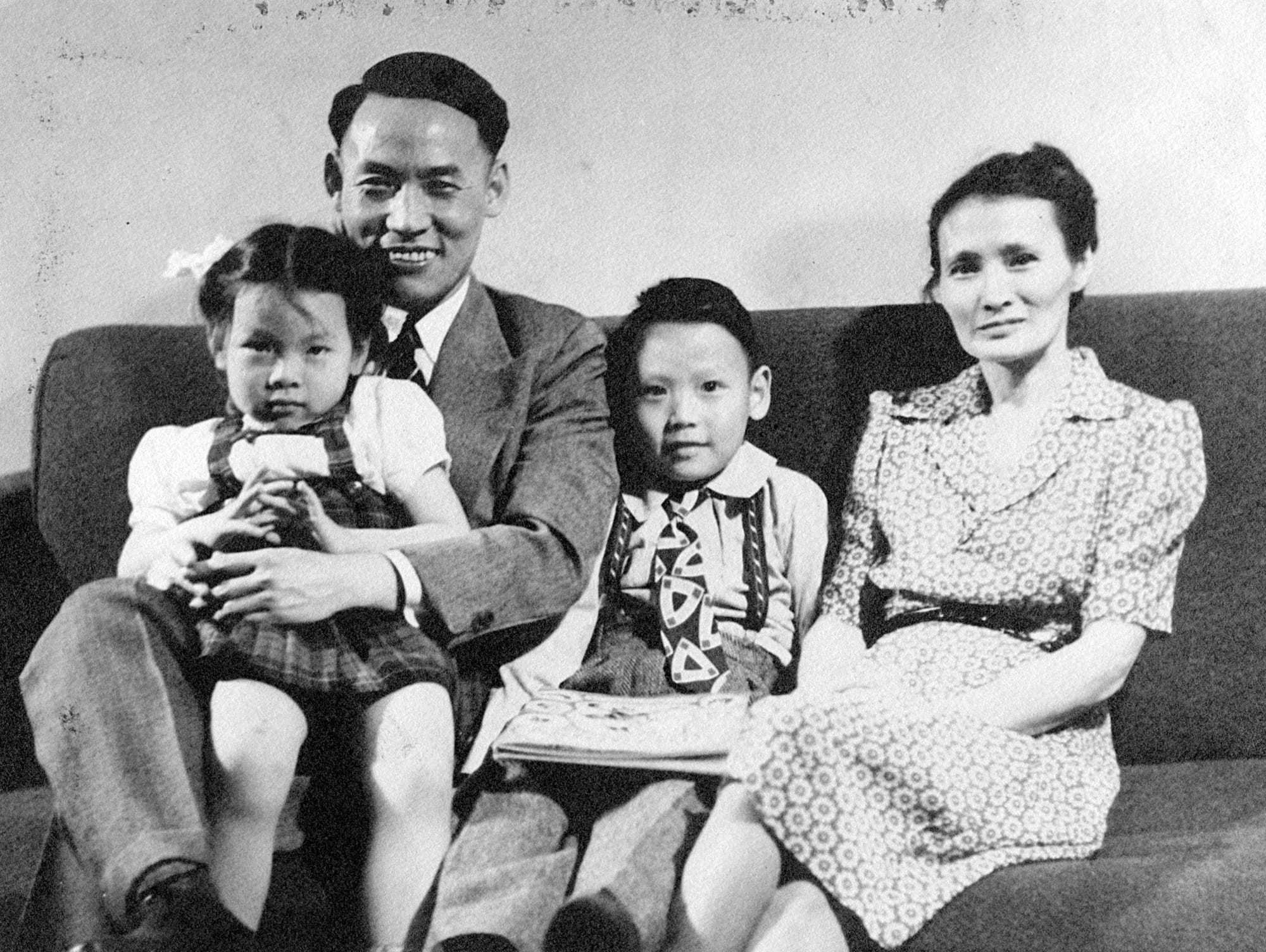
Isabel: The memoir reads like an archive with the inclusion of photos and newspaper articles with footnotes embedded, as well as an appendix. What prompted the writing of this memoir, and why did you decide on this format?
Elaine: When I was about 75 years old, an Asian American historian friend who was doing archival research about the Barred Zone Act (the Immigration Act of 1917) reached out to me. He happened across my mother's marriage license application in 1921, which had the names of her mother, first husband, and stepfather. I had never known those people or their names.
The application seemed to have gotten the names wrong—it said her husband was born in “Tokyo, Korea,” or “Seoul, Japan,” or something like that. And they spelled his name in a way that couldn't possibly be a Korean name.…
This historian friend also found a photo of a tombstone of my mother's first son who died during a circumcision procedure. These photos and documents came to my attention, as well as the essay my mother wrote when she was in her late 20s or early 30s in the Korean Student Newsletter about how Koreans and Korean Americans can work together. These things made me wonder about her anew, because when she died in 1989, I pretty much thought I knew what I could know about her.
I also thought I'd write a few essays for my granddaughters. They’re Korean, Vietnamese, white, and Chinese, and they go to school with kids of all different mixtures and races. Right now, they don't think too much about their roots. Someday, they might want to know more about the Korean side of their ancestry.
When some (younger) members from AWU and I went to dinner at a Korean restaurant in Oakland, I realized they didn't know that that restaurant was part of the Koryo Village Center built in the late 1980s. This village was the result of a small business incubator grant spearheaded by the KCCEB. I thought it would be a shame if that history was never known to anyone, because so many people were involved and cared about it. I thought I should try to put that into the record as well.
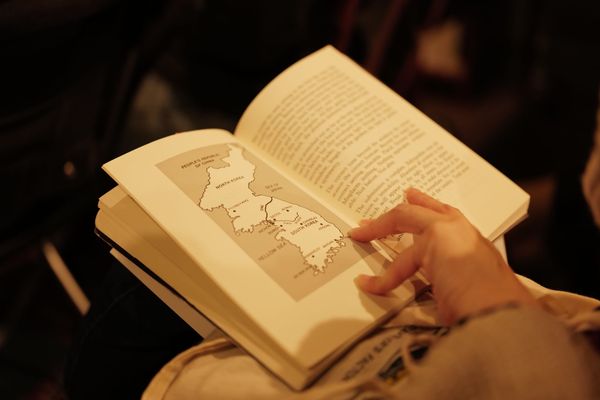
Isabel: You visited Korea several times, during the 1960s, and then again in 1987 as a professor on a Fulbright scholarship. You wrote, “Although I was living and working in South Korea as a middle-aged woman during a time of political and economic transformation, I was willing to forgive Korean patriarchy, which was strongly enforced wherever I went, because I was reluctant to think of Korean identity as a negative. What I heard and thought about during my sojourn in Seoul helped me understand that Korean patriarchy, overwhelming and powerful as it is, is not Korean identity.” Can you say more about that?
Elaine: When I first went to Korea in the 1960s and lived with my half-sister, she told me things like, “Your grandfather said, ‘Don't laugh out loud, because we don't like to hear women's laughter from the inner rooms.’” I thought she was trying to have me understand Korean mores. Now that I think back on it, in some cases, she was making an objection. She was humorous and jovial, and never acted dramatic or melancholy about how things were.
Back then, I felt like everything people were telling me that I should or shouldn't do was Korean identity. They’d say, “Don't walk too fast,” or, “You're walking too fast, you’re taking much too big strides.” A lot of these things—it was directed toward women.
I felt so disappointed, because all those things that everybody told me to do when I was in my 20s, now it was a different set of things to do in my 40s in order to be a Korean woman. It hit me then how they're all super patriarchal. It’s not like I met a lot of feminists at the time who provided me with context. I realized I had been fooling myself. My dad was the one who grew up in Korea. Mom didn’t grow up in Korea, never lived there. She had no idea, except from her own mother and stepfather in the US, about how women should act. She paid lip service to it, but in action, it was hard to say that she went along with it.
For example, in my 20s, I was pressured by many people in Korea and the States to get married—but never by my mom. She kept saying I should be a typist in the Library of Congress. Later, I realized that's because they don't discriminate on the basis of race in the federal government—and you get a pension after you reach a certain GS level. She figured that a Korean man would never want to marry me and that an American would treat me badly. She no doubt concluded that I was going to end up alone. Instead of saying, you’re going to be alone, she said, you've got to have a pension.
You don't see these things at the time, and later on, you see your mother through a different lens, and society through that lens. I had thought she wasn't Korean enough. I thought that was why she was the way she was. Reconsidering her after I myself was old, almost as old as she was when she died, was a revelation.
My dad took up so much space, and she had to squeeze in a little side space, always. He's vivid in the picture, whereas she faded.
Isabel: Pivoting to your father and his impact on your sense of identity, you wrote: “Traveling to Asia with Dad made me realize that it did not much matter to him that Americans thought he didn’t belong in America, because he knew very well where he belonged. Unlike me or my brother, he had the kind of self-confidence people enjoy after spending their formative years as part of a linguistic, cultural, and racial or ethnic majority.” While you grew up in Maryland, still considered the South, in one of very few Korean families around.
Hannah: I'm curious about your sense of confidence in relation to his. Do you feel you had that same sense of confidence? Or was it more complex for you?
Elaine: I'm very grateful that he was such a national chauvinist, because for some of the people that I know, their parents tried to minimize their racial or ethnic background in order to help them succeed in the US. In the case of Dad, I'm grateful that he was constantly talking about Korea, because even though I didn't believe it at the time, it was really helpful to me later for my self-image.
I think I was injured by a combination of being physically different from everybody and both the American and South Korean obsession with appearances. I don't mean just looks, but appearances—the way you dress, do make-up, your hair looks.
When I was growing up, there were nothing but movie magazines of Marilyn Monroe with big boobs, you know? It was drilled into you that you should look this way, and if you didn't, then you aren't part of society. There wasn't enough diversity of taste at the time. With Koreans, it wasn't about physical appearance as much as your face to other people. Are you, or do you, look rich? On the other hand, America is like that too.
Finally, the looks and appearances part has started to fade away. But it played much too big a role and interfered with my life. For example, when I was preparing for a presentation, I would be worried about my clothes, and yet, the presentation was the whole point. I kind of resented that. I always thought I was going to be judged by superficial appearances.
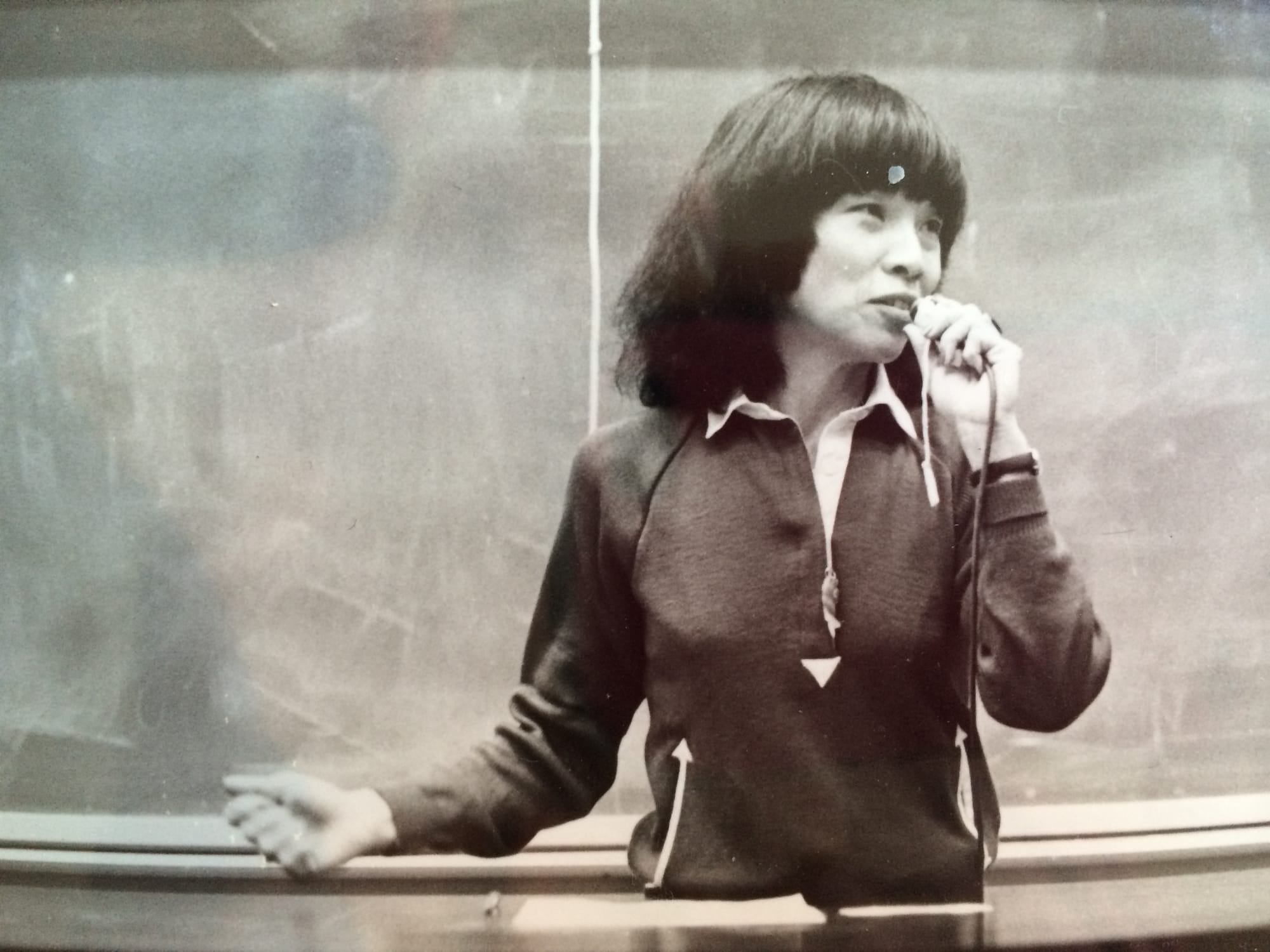
Isabel: After earning a master’s degree in English and comparative literature from Columbia University, you traveled across the country to UC Berkeley. In Berkeley, you were the sole Korean American member of the AAPA, the first pan–Asian American political organization in the country, which was part of the TWLF. It seemed like you thought, "Okay, I haven’t found a community, so I'm just going to create it."
Elaine: I wish I could say that it was deliberate, but it was kind of an accident. I didn't know when I first came to Berkeley that the only people I met who were born and raised in California were the Asians.
All of the white folks in my graduate program were from some other part of the country, and the only local folks were the Chinese and Japanese Americans that I encountered after I joined the TWLF. I never quite fit in with them, either, because I wasn't from that social class, and I wasn't from that locale.
Being from the East Coast, we were like white folks to them, because we spoke differently and we had, unfortunately for us, much more familiarity with white society than we did with Asian American society. It was a struggle to become accepted by them. I did want to find something that was better than what I had in high school. I thought they were my long-lost classmates, even though they were a lot younger than I was. You do build your community wherever you go.
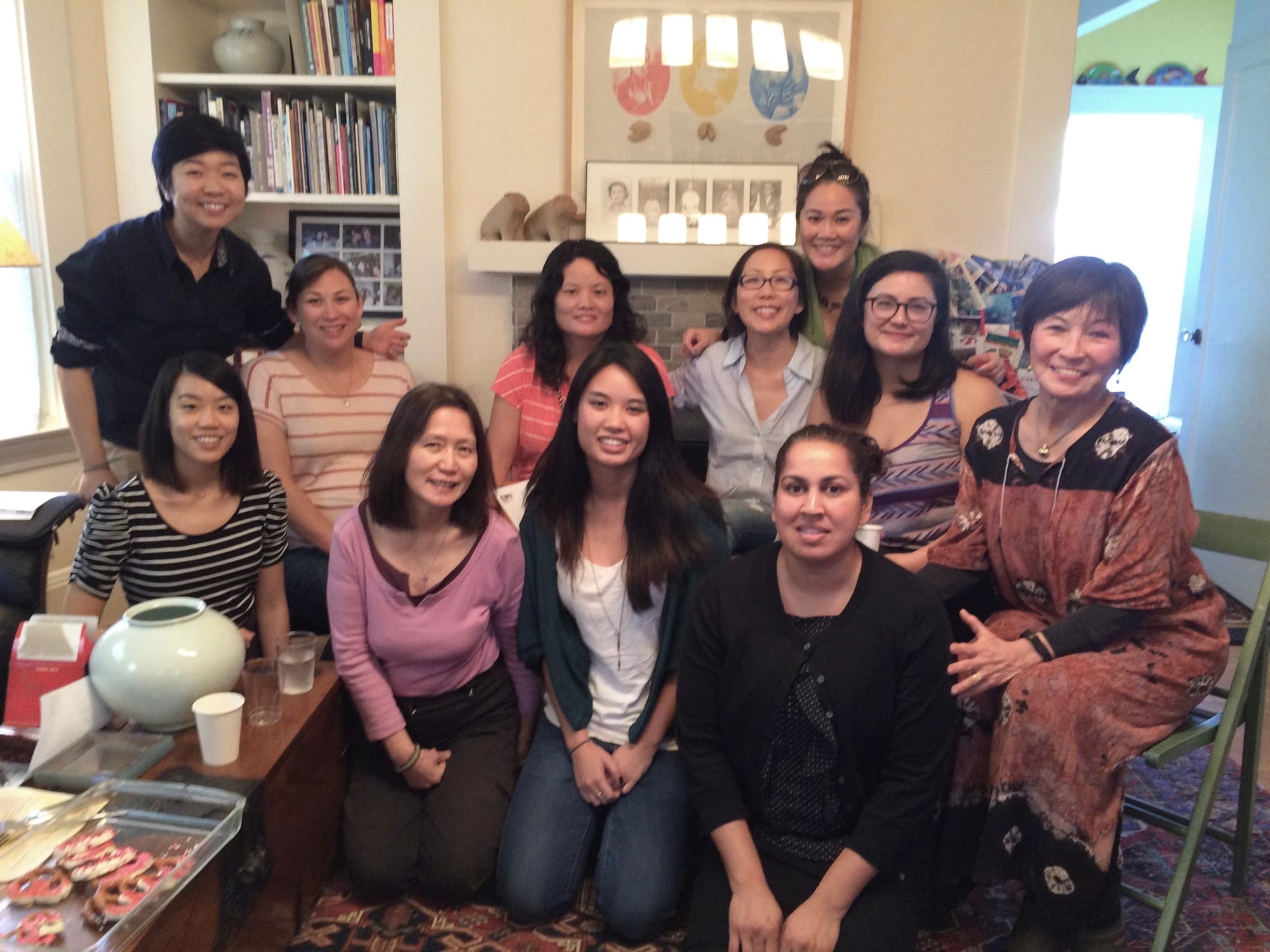
Hannah: I wanted to ask about intergenerational solidarity and community building. That's something that we've done with AWU, which you co-founded in 1976. There's a real age range in the group. Why do you think intergenerational community building is important? If you were to advise us Radical Ahjummas, should we only be speaking to feminists older than 40, or should we also engage with those in their 20s?
Elaine: I think you should. You can start with your own interest, to see what's coming in the future. But one of the things that people like about AWU is that it does bring together those age groups and different ethnicities. For me as an older person, it's great not to just hang around with my own age group, because we tend to be too homogeneous in certain ways. It's a cliche that anybody who's 40 could learn a lot from somebody who is 60 or 20, isn't it true? Not just from your kid or your grandkid, but other people. We’re stratified by age group, not just in Korea, but also in the US.
What’s great about AWU is that we are sort of closed, because we're all Asians and all women. It's not like it's wide open to anything, but it's at least a kind of diversity within that structure. We can feel some solidarity and some similarity, but we can also feel some differences, which I hope will continue.
Hannah: Speaking of community, it feels as though you have lived through a Trumpian era already. With Reagan’s cuts in the 1980s directed at nonprofits, you had to do community building with no training, technical support or funding, and yet, you still ran projects like the TV program Asians Now and various initiatives with the KCCEB. How do we get through this current political moment that feels so similar? Do you think it's worse than the Reagan era, and how do we get through it as communities, as nonprofits?
Elaine: I do think it's worse than the Reagan era, but I think that because I lived between the 1940s and Trump. I didn't see the days of the lynchings, exclusion and all the terrible things that happened in the first half of the 20th century, so I can't say that it's worse now than it had been before.
With regard to the eras I have witnessed, I'm disappointed that what I thought was a gradual progress towards something better didn't turn out necessarily to be that way. From participating in various demonstrations now—where there isn’t a single television news camera, though there are thousands of people present—means there is a lot going on that's not being represented. This is not that different from the way it was back in the day, when many things were going on that never got any publicity.
What I'm trying to think about is how, despite this, efforts and organizations like Asian American Studies and KCCEB didn’t die. The people who did all that work for KCCEB went on to do good things, and the people who participated in the TWLF, most of them ended up putting their values into practice.
For example, one person became a very important person in the public health system in San Francisco. He helped reconfigure protocols so that immigrants had interpreters to help facilitate their care without losing their place in line. From the KCCEB, Susan Lee is doing important work against violence in LA and Chicago, and others went to Korea and worked for Kim Dae-Jung [opposition leader to South Korea’s dictatorships; he served as President from 1998 to 2003]. We should remember there are a lot of inspiring things going on around the country that aren't being represented, so we should take heart. Even if an initiative doesn’t succeed and last, it can still have a continuous, good result. It’s never a waste.
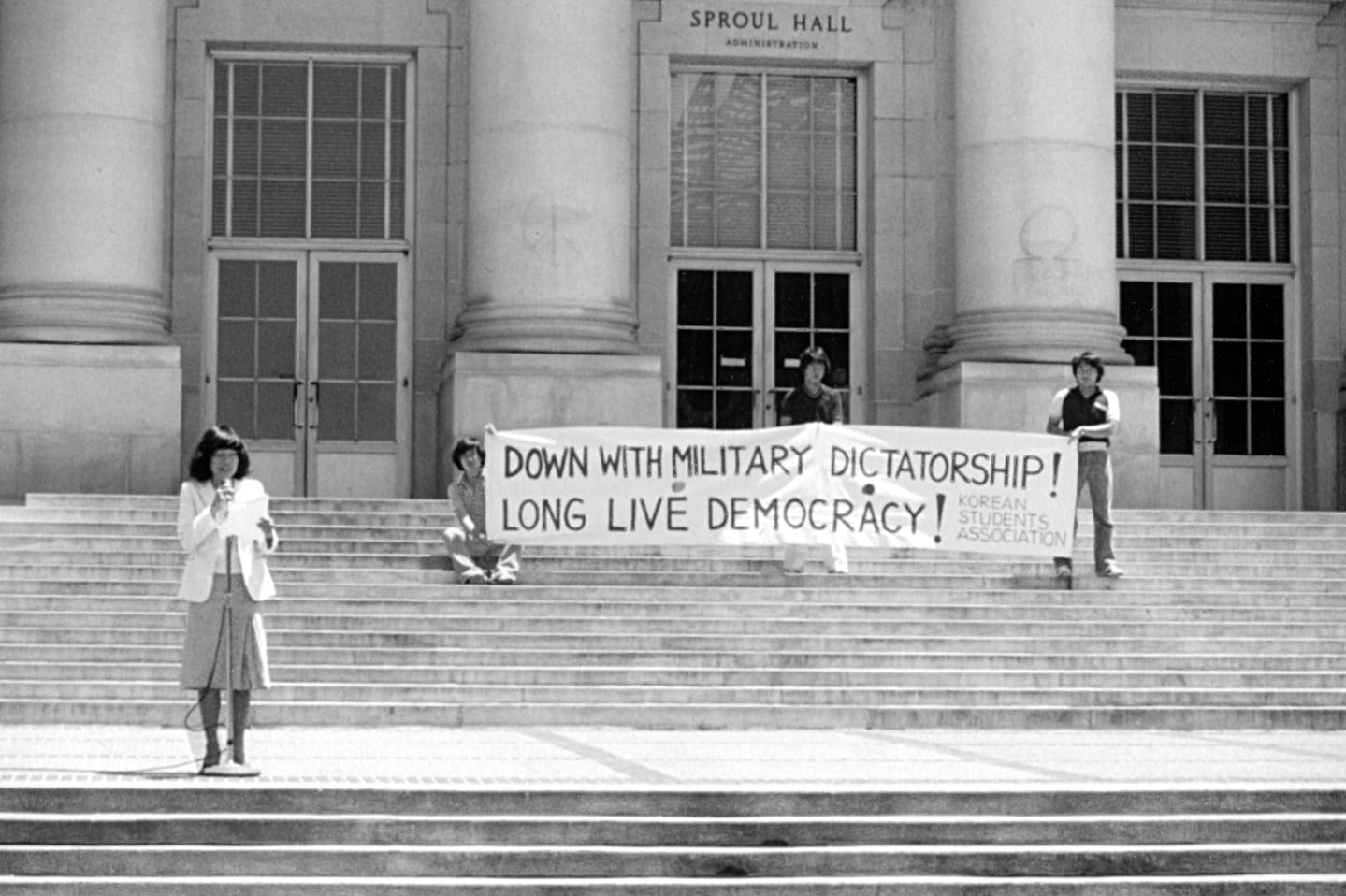
Hannah: Speaking of revolutionary acts, you were threatened multiple times by officials from the Korean government or men it hired to intimidate you during the time of South Korea’s dictatorships. You spoke up against these regimes in your lectures, on television about the Korean CIA’s efforts to silence any leftist leanings from its citizens abroad (kidnappings and “accidental deaths”), and against the Gwangju Uprising on your TV program Asians Now.
In your book, you mention how as you were on your way to the CBS TV station to discuss KCIA activities abroad, it occurred to you that someone could have planted a bomb in your car. How did you summon the courage to keep speaking out?
Elaine: I didn’t think of myself as important enough to target. I thought of the car bomb because Orlando Letelier, the Chilean diplomat who spoke out against Pinochet, had been killed by a car bomb in 1976. I thought that I wasn’t important enough to target like Letelier.
The right-wing government, like the Syngman Rhee administration, hired goons to beat up or kill people. The South Korean embassy in San Francisco also hired people to menace people in the community. The guy who came and sat in our meetings, he was one of those thugs. These men tried to tell me not to speak in public.
It seemed a little ridiculous for them to be doing that on the Berkeley campus, which had 20,000 students at the time. Maybe I would have been scared if I were living in Seoul. I didn't like it that somebody reported to them that I was going to make a speech against the Korean government, but it helped to not think of myself as being important enough for them to do anything. I can't say this now, as we see our current administration going after everybody in their house, but this is a very unusual situation, and hopefully we will not end up with a militarized US.
Hannah: Maybe you didn't think of yourself as important, but you were certainly a person of interest, enough that people would approach you.
Elaine: (Laughing) I did make a vanity license plate that said JUCHE. [Juche translates as “self-reliance” and refers to the state ideology of North Korea.] That definitely triggered them. That’s probably why they thought I was a spy—but why would a spy from North Korea do that? The last thing a real spy would do is to buy such a license plate.
The Consulate invited me many times to this expensive restaurant in San Francisco, because their method was to talk to or bribe the person to convince them to stop speaking against the government. It wasn’t always as menacing as I made it sound in the book, because they did seem pretty clumsy.
Isabel: I’m trying to picture these scary-looking men as not actually being scary. Was that partly due to language? I can imagine this scene like a skit, where they’re trying to intimidate you, but they can't speak in the language to effectively do that.
Elaine: You hit it on the head. I had just made a long speech on Sproul Plaza, after which these men insisted on taking our group to a basement. But it was hard for me to take them seriously—they were goofy-looking, with white socks and pants that were too short, which didn’t match their shirts. I did find one guy’s facial expression menacing. But there were a lot of us in the room. When we decided to speak English, he couldn't follow what was going on. He just sat there glowering.
Hannah: Tell us about your meeting with the Consul General, where you engineered a height difference.
Elaine: I had refused to meet with the Consul General many times, until not long after the Gwangju Uprising, when I finally agreed to a meeting on campus. I pretended to be the chair of the Ethnic Studies department, and had staff interrupt me with phone calls to make me look busy and important. I seated myself in a high chair and placed lower chairs, facing the culturally inauspicious direction of the west, for the Consul General and his assistant. It was fun to do. He had no idea what was going on. The university intimidated him. He was not at home there, so I had all the advantages.
The Consul General gave money to other Korean organizations and community groups, which then invited him as a guest of honor to their programs. We at the KCCEB really needed funding for our programs, but made it a principle that we were never going to take funds from the Korean government, because we assumed that there would be strings attached. Maybe there wouldn't have been, but we didn't want to make a deal with people who were excusing murder and massacre.
Hannah: One of the lines you wrote in the closing chapter, which I read two or three years ago and has stayed with me ever since—is that even in older age, women can have fun. It’s a mantra I plan on living by.
Elaine: They close in on you on just being a grandma—the only value you have when you're not working and your husband has passed away is that you're a widow. We’re forced into a sort of a mold, and it's not different from any other age that we passed through, when there were all these other things that were expected of you.
This must be part of why you and Radical Ahjumma want to investigate women who are a little bit older than yourselves, because you have experienced these different age and position expectations—and maybe you don't want to go along with what they laid out for you from now on. That’s really a good thing.
This conversation has been edited and condensed for clarity. Pre-order Primary Sources at your favorite bookshop. For more interviews and the latest on events and hats for the revolution, subscribe to our mailing list at www.radicalahjumma.com. Follow us @radicalahjumma.